Window Tinting vs. Wrapping: Key Differences (2026 Guide)
Window tinting vs. wrapping: find out the key differences in cost, materials, and benefits. Which automotive customization is right for your car in 2026?
When it comes to automotive customization, two of the most popular upgrades are window tinting and vehicle wrapping. While both involve applying a specialized film to your vehicle, they serve completely different purposes, use different materials, and require different installation techniques.
Whether you’re looking to protect your interior from UV rays or completely change the color of your car, understanding the nuances between these two services is essential. In this guide, we break down the costs, materials, and benefits of each to help you decide which investment is right for your vehicle.
At a Glance: Comparison Table
| Feature | Window Tinting | Vehicle Wrapping |
|---|---|---|
| Primary Purpose | Heat rejection & privacy | Aesthetics & paint protection |
| Material | Polyester (dyed, metalized, or ceramic) | Vinyl (PVC) or Polyurethane |
| Surface Application | Interior side of glass | Exterior painted surfaces |
| Durability | 5–10+ years (quality ceramic) | 3–7 years |
| Average Cost | $250 – $800 | $2,500 – $6,000 |
| Legal Restrictions | Highly regulated (VLT percentages) | Generally unrestricted (except safety colors) |
What is Window Tinting?
Window tinting involves applying a thin, multi-layered polyester film to the inside of a vehicle's windows. Modern tinting technology has evolved far beyond simply "making glass darker."
Benefits of Tinting:
* Heat Rejection: High-end ceramic tints can block up to 99% of infrared heat, keeping your cabin cool.
* UV Protection: Protects your skin and prevents your dashboard and leather seats from cracking or fading.
* Privacy & Security: Obscures the contents of your vehicle from prying eyes.
* Glare Reduction: Makes driving safer during sunrise, sunset, or at night against bright headlights.
Learn more about light transmission levels in our Window Tint Percentage Guide.
What is Vehicle Wrapping?
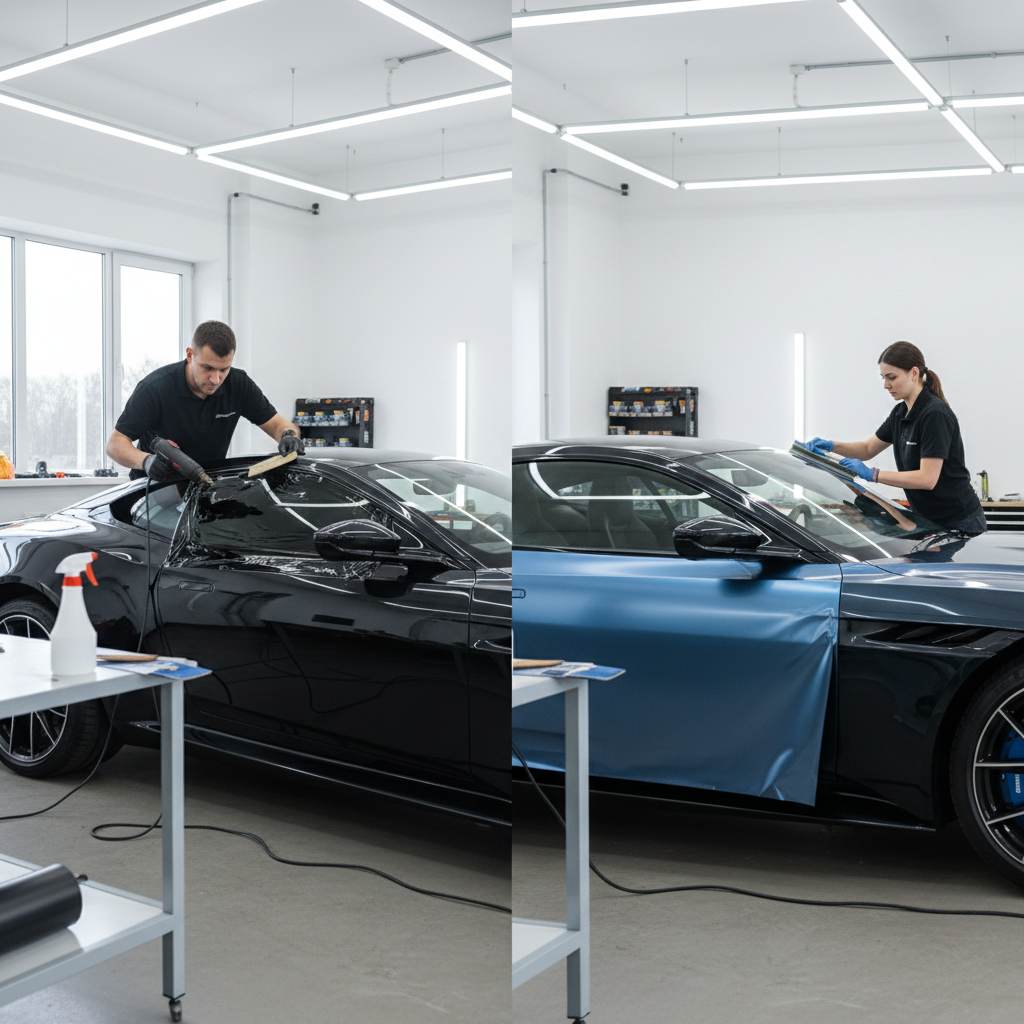
Vehicle wrapping is the process of covering the exterior body panels of a car with large sheets of pressure-activated vinyl. This allows for a total transformation of the car's appearance without the permanence or high cost of a custom paint job.
Benefits of Wrapping:
* Unlimited Aesthetics: Choose from matte, gloss, satin, chrome, or even color-shift finishes.
* Paint Preservation: The vinyl acts as a secondary skin, protecting the original OEM paint from light scratches and rock chips.
* Resale Value: Because it is reversible, you can wrap a car in a wild color and return it to factory original when it’s time to sell.
* Advertising: For businesses, wraps serve as mobile billboards. Check out our Commercial Van Wrap Guide for more details.
Key Differences Explained
1. Material Composition
Window tints are typically made of polyethylene terephthalate (PET). They are designed to be optically clear so they don't distort your vision. In contrast, vehicle wraps are made of polyvinyl chloride (PVC) (Standard Vinyl) or Polyurethane (for Color PPF). These materials are opaque and much thicker than tint film to withstand road debris.
2. Installation Process
* Tinting: Requires a surgically clean environment to avoid dust specs under the film. It is applied using a "wet" method with a slip solution.
* Wrapping: While cleanliness is vital, wrapping is usually a "dry" application. Installers use heat guns to stretch the material around complex curves and deep recesses like bumpers and door handles.
3. Legal Considerations
This is a major differentiator. While you can wrap your car almost any color (excluding mimicking emergency vehicles), window tint is strictly governed by state law. Every state has a specific "Visible Light Transmission" (VLT) limit. If your tint is too dark, you risk heavy fines and failing inspections.
4. Cost Comparison
Window tinting is significantly more affordable. A full sedan might cost $300 to $600 for high-quality ceramic tint. A full vehicle wrap, however, is a labor-intensive process that can range from $2,500 to over $5,000 depending on the vehicle size and material type.
To get a specific estimate for your vehicle, check out our Wrap Cost Calculator.
Can You Do Both?
Absolutely! In fact, most high-end builds utilize both services. A matte black wrap paired with dark ceramic window tint creates a cohesive, "murdered-out" aesthetic that offers both style and functional heat rejection.
If you are ready to find a professional who can handle both services, use TheWrapMap Search to locate top-rated installers in your area.
Summary: Which One Do You Need?
* Choose Window Tinting if your primary goal is comfort, interior protection, and privacy.
* Choose Vehicle Wrapping if you want to change your car's look, protect the paint, or advertise a business.
Regardless of which you choose, the quality of the installation is what determines the longevity of the product. Always hire a certified professional to ensure your film doesn't bubble, peel, or damage your vehicle.
Frequently Asked Questions
Is window tint the same material as a car wrap?
No, window tint and vinyl wrap are made of different materials. Tint is a polyester-based film designed for glass and optical clarity, while vehicle wrap is a PVC or polyurethane film designed to adhere to painted metal and plastic surfaces. You cannot use one in place of the other.
Is it cheaper to tint or wrap a car?
Window tinting is much cheaper, typically costing between $200 and $800 for a full vehicle. A high-quality professional vehicle wrap typically starts at $2,500 and can exceed $6,000 depending on the material and complexity of the car.
Can I get my windows tinted and my car wrapped at the same time?
Yes, you can apply window tint to a car that is already wrapped. Tint is applied to the interior surface of the glass, while the wrap is applied to the exterior painted panels. Combining both is a common way to achieve a complete custom look.