Partial vs. Full Wrap: Cost & Coverage Comparison (2026)
Partial wrap vs full wrap? Compare costs ($500 vs $2,500+), coverage, and ROI to find the perfect vinyl wrap solution for your car or business in 2026.
Deciding between a partial wrap and a full wrap is one of the most common dilemmas for vehicle owners. Whether you are looking to revitalize your personal ride or turn a company van into a mobile billboard, the choice often comes down to two factors: budget and impact.
In this guide, we break down the costs, coverage areas, and visual differences to help you decide which option fits your needs.
What is a Full Wrap?
A full wrap covers every painted surface of the vehicle. This includes the hood, roof, trunk, bumpers, and all side panels. When completed by a professional, a full wrap changes the entire appearance of the vehicle, making it look like a high-end factory paint job.
* Best for: Complete color changes, premium aesthetic upgrades, and maximum paint protection.
* Average Cost: $2,500 – $6,000+ (depending on vehicle size and material).
What is a Partial Wrap?
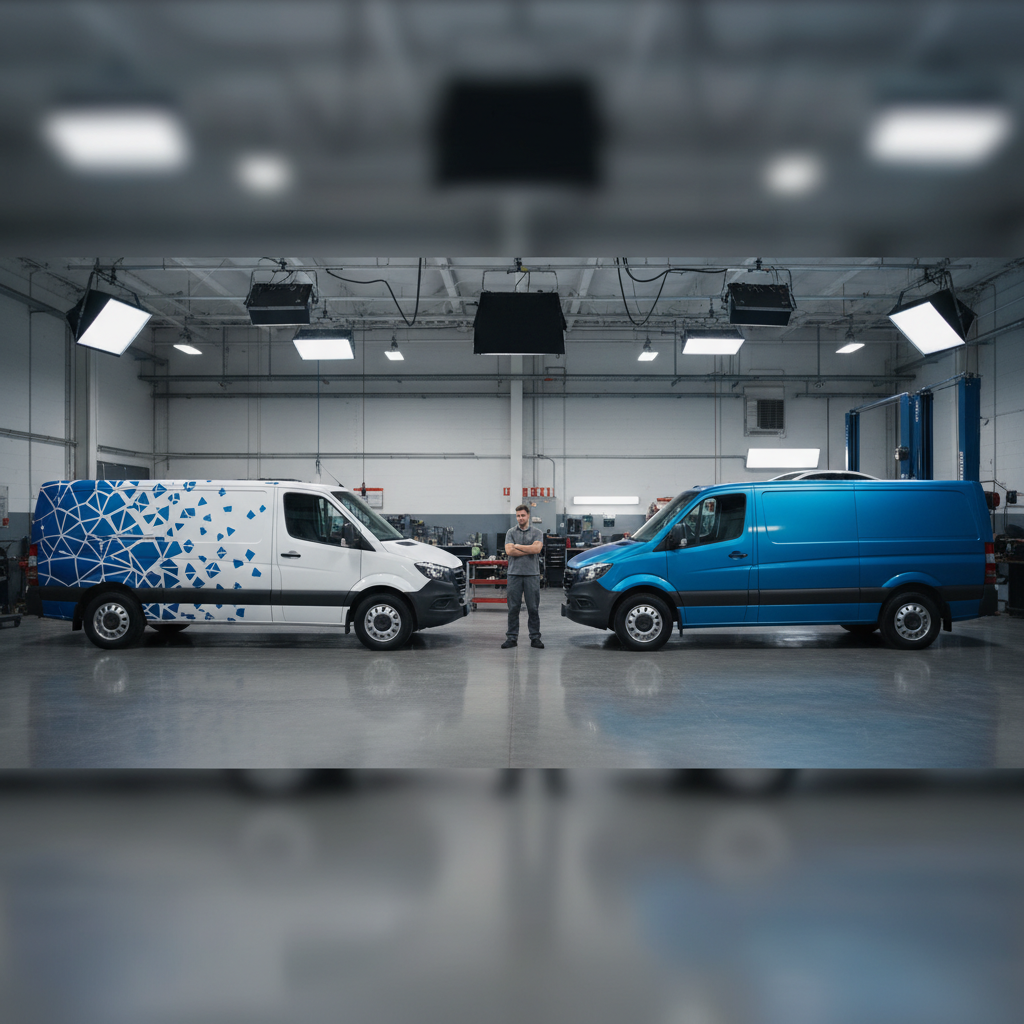
A partial wrap covers only a specific portion of the vehicle—usually between 25% and 75%. Common configurations include wrapping just the hood, the roof, or the sides of a van. Installers use the vehicle's original paint color as a "background" for the wrap design.
* Best for: Business branding, budget-friendly styling, and accenting specific body lines.
* Average Cost: $500 – $2,500.
Comparison at a Glance: Full vs. Partial
| Feature | Partial Wrap | Full Wrap |
|---|---|---|
| Coverage | 25% to 75% of surfaces | 100% of painted surfaces |
| Average Cost | $500 - $2,500 | $2,500 - $6,000+ |
| Installation Time | 1 - 2 days | 3 - 5 days |
| Paint Protection | Only covered areas | Entire vehicle |
| Resale Value | Minimal impact | High (protects OEM paint) |
| Design Style | Accents & Logos | Total Transformation |
Cost Breakdown: Why the Price Gap?
The cost difference isn't just about the amount of vinyl used. It also involves the labor required for disassembly.
- Material Usage: A full wrap on a large SUV might require 60-70 feet of vinyl, whereas a partial wrap might only use 15-20 feet.
- Disassembly: Full wraps often require removing door handles, mirrors, headlights, and badges to tuck the vinyl edges seamlessly. Partial wraps often avoid these high-labor areas.
- Design Complexity: For businesses, a partial wrap requires "negative space" design to ensure the graphics look good against the existing paint color.
If you're curious about specific pricing for your model, try our /calculator to get an instant estimate.
When Should You Choose a Partial Wrap?
A partial wrap is the king of ROI (Return on Investment). For small businesses, you can achieve 90% of the visual impact of a full wrap at 40% of the cost by focusing graphics on the sides and rear doors.
It’s also popular for "track builds" or enthusiast cars where only the hood and roof are wrapped in carbon fiber or satin black to create a sporty, two-tone look. You can explore different wrap types to see which finishes work best for partial applications.
When is a Full Wrap Necessary?
If your vehicle's paint is a color that clashes with your desired design (e.g., a bright red car when you want a blue and green brand identity), a partial wrap will look unfinished. A full wrap is also the only way to ensure the entire vehicle is protected from UV rays and minor rock chips.
Ready to see how a full transformation looks? Search for top-rated installers in your area to view their portfolios.
Making the Decision: 3 Questions to Ask
- What is the goal? If it's a color change, go Full. If it's a business phone number and logo, go Partial.
- What color is the car now? Neutral colors like white, black, and silver are perfect for partial wraps because they blend easily with most designs.
- How long will you keep the vehicle? Full wraps protect the paint indefinitely, often paying for themselves in preserved resale value.
Regardless of your choice, the quality of the installation is what matters most. Head over to our directory to find a certified professional near you.
Frequently Asked Questions
What is the main difference between a partial and full wrap?
A partial wrap covers between 25% and 75% of a vehicle, while a full wrap covers 100% of the painted surfaces. Full wraps are better for total color changes and paint protection, while partial wraps are more cost-effective for business branding and accents.
Is a partial wrap significantly cheaper than a full wrap?
Partial wraps typically cost between $500 and $2,500 depending on the percentage of the vehicle covered. Full wraps generally start at $2,500 and can exceed $6,000 for luxury vehicles or specialty materials like chrome or color-shift vinyl.
Do partial wraps protect the paint?
Yes, a full wrap provides 100% UV protection and guards against minor scratches and rock chips for all factory paint. A partial wrap only protects the specific areas where the vinyl is applied, which can lead to uneven paint fading over several years.