Helmet Vinyl Wraps: 2026 Guide to Costs & Styles
Looking to customize your helmet? Our 2026 guide covers helmet vinyl wrap costs, materials, and why it's the best alternative to custom paint.
While vehicle wraps dominate the industry, helmet vinyl wraps have become the ultimate way for athletes, motorcyclists, and racers to express their identity. Whether you are hitting the track, the slopes, or the open road, a custom helmet wrap offers a level of detail and finish that traditional paint often can't match at the same price point.
In this guide, we explore why vinyl is the preferred choice for helmet customization in 2026, the costs involved, and the technical challenges of wrapping compound curves.
Why Wrap a Helmet Instead of Painting?
Traditionally, custom helmets were airbrushed. While airbrushing is an art form, vinyl wraps have surged in popularity for several reasons:
- Cost Efficiency: A high-end custom paint job can cost upwards of $1,500. A professional vinyl wrap usually ranges from $250 to $600.
- Protection: Vinyl acts as a sacrificial layer, protecting the original helmet finish from rock chips, scratches, and UV damage.
- Reversibility: Unlike paint, vinyl can be removed. This is crucial if you plan to sell the helmet or change your sponsor logos next season.
- Finish Variety: Vinyl offers textures that paint cannot easily replicate, such as forged carbon fiber, brushed metal, and ultra-gloss chrome.
Average Cost of Helmet Wraps in 2026
The cost of wrapping a helmet depends significantly on the complexity of the shell and the type of vinyl used.
| Helmet Type | Estimated Pro Cost | Difficulty Level |
|---|---|---|
| Motorcycle (Full Face) | $350 - $550 | High (Vents & Visors) |
| Motocross/Off-Road | $400 - $600 | Extreme (Complex Angles) |
| Racing/Auto Helmet | $300 - $500 | Medium |
| Ski / Snowboard | $200 - $350 | Low to Medium |
If you are curious about how these prices compare to full vehicle projects, check out our 2024 Price Guide.
The Complexity of Compound Curves
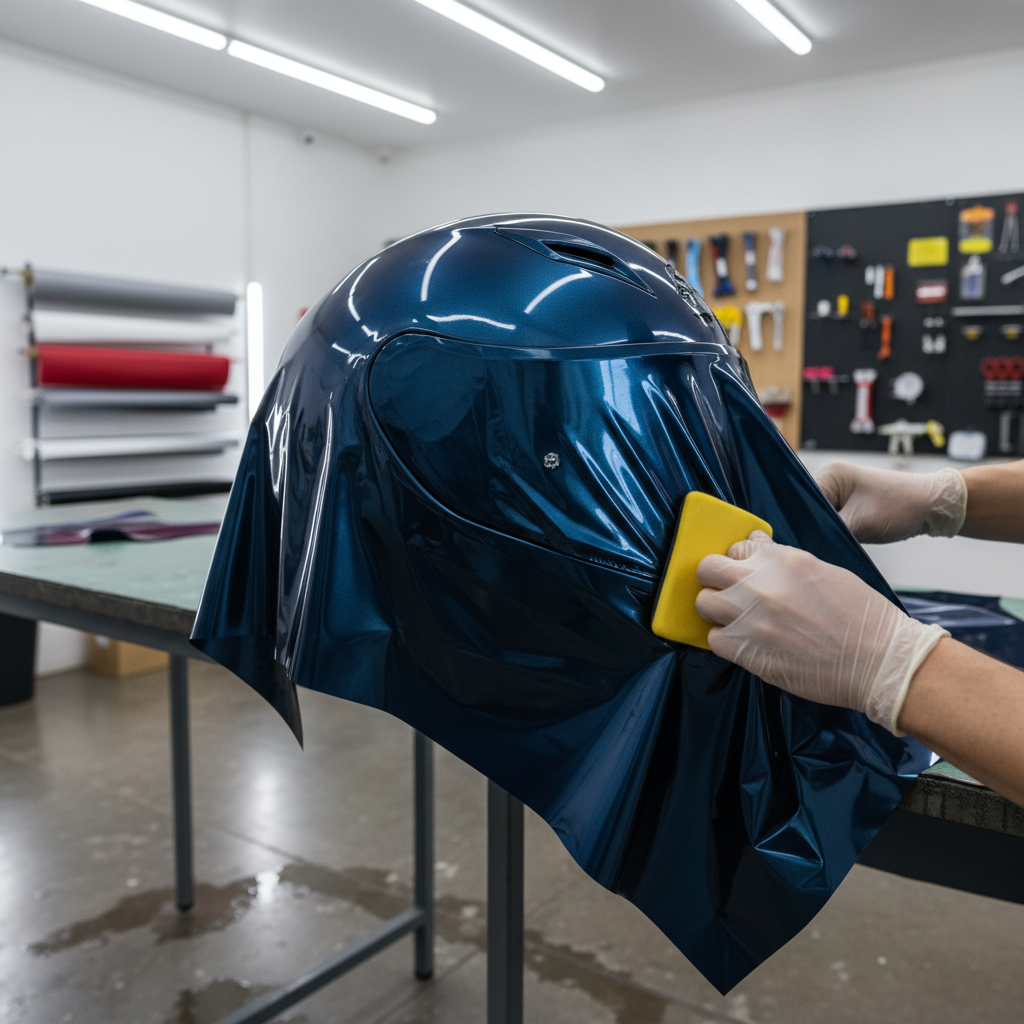
Helmets are arguably the most difficult items to wrap. Unlike a car hood, which is relatively flat, a helmet is a sphere with "compound curves."
* Stretch Management: If a wrapper stretches the vinyl too much to fit the curve, the color will "whiten" or distort.
* Seam Placement: Because vinyl comes in flat sheets, it is impossible to wrap a sphere with one piece without seams. Professional installers use "knifeless tape" to create hidden seams along the helmet's natural body lines.
* Heat Control: Too much heat during installation can over-expand the vinyl, leading to premature lifting or "fingers" appearing near the base of the helmet.
DIY vs. Professional Installation
Because helmets are small, many enthusiasts attempt to DIY the project. However, the failure rate for first-time helmet wraps is over 80%. The tight recesses around vents and the complexity of the chin bar on motorcycle helmets require professional techniques.
If you want a flawless finish that won't peel after two weeks, we recommend using our search tool to find a local installer who specializes in "small format" or "motorsports" wraps.
Choosing the Right Material
When selecting a wrap for your gear, consider the environment:
* Gloss/Satin/Matte: Standard aesthetic choices. Discover more wrap types here.
* Reflective Vinyl: Highly recommended for street motorcycle riders to increase visibility at night.
* Chrome: Stunning look, but the least flexible material, making it the most expensive to install on a helmet.
Ready to Customize Your Gear?
Whether you're looking for a simple color change or a complex racing livery, a professional wrap shop can bring your vision to life. Use our cost calculator to estimate your budget and start your project today!
Frequently Asked Questions
How long does a helmet vinyl wrap last?
A professional helmet wrap typically lasts 3 to 5 years. Because helmets are handled frequently and exposed to the elements, the lifespan depends heavily on how the helmet is stored. Keeping it in a soft bag when not in use will extend the life of the vinyl.
Will vinyl wrap damage the paint on my helmet?
Yes, vinyl is safe for helmets. High-quality automotive-grade vinyl uses a pressure-activated adhesive that does not react with the polycarbonate or composite shells of modern helmets. It can be removed safely without damaging the factory finish.
Can I wrap a motorcycle helmet myself?
Technically yes, but it is extremely difficult. Because of the spherical shape, you will likely encounter wrinkles and bubbles. Most DIYers find that they spend more on wasted material than they would have spent paying a professional.