Food Truck Wraps Guide: 2026 Costs & Design Tips
Maximize your food truck's ROI with our 2026 guide to costs, materials, and high-impact design strategies for mobile catering success.
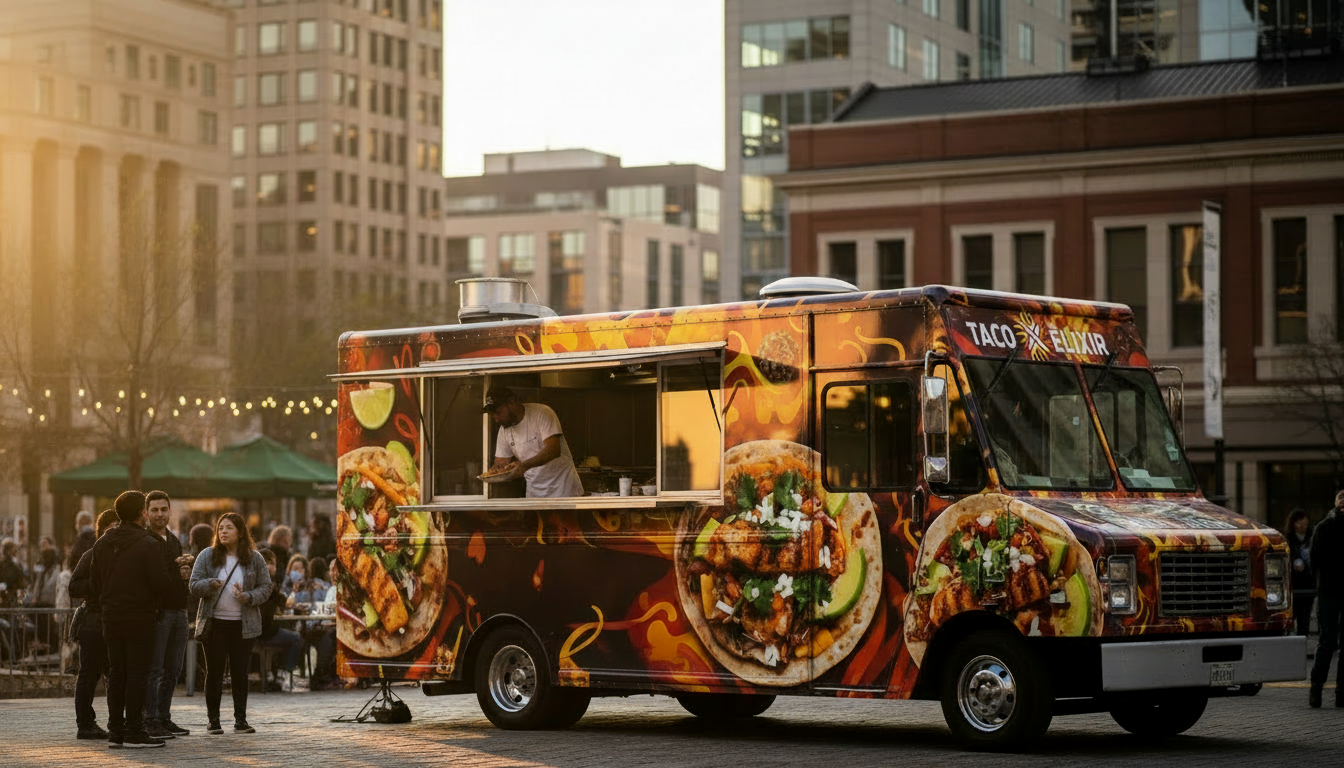
In the mobile food industry, your truck is more than just a kitchen—it is your primary marketing tool. A professional food truck wrap is the difference between being a local curiosity and a regional brand powerhouse. With the growth of the outdoor dining scene in 2026, standing out in a crowded "food truck park" requires more than just good recipes; it requires high-impact visual branding.
This guide explores everything you need to know about wrapping your food truck, from material selection to maximizing your return on investment.
Why Branding is Your Most Important Ingredient
A food truck is a moving billboard. Statistics show that a single mobile advertisement can generate between 30,000 to 70,000 views per day. For a food business, the wrap serves two purposes:
- Attraction: Drawing customers in from across a parking lot.
- Trust: Professional graphics signal cleanliness, legitimacy, and quality.
The Cost of Food Truck Wraps (2026 Estimates)
Food truck wraps are more expensive than standard car wraps due to the sheer surface area and the complexity of the "box" shape, which often includes rivets, serving windows, and external equipment.
| Vehicle Type | Estimated Full Wrap Cost | Estimated Partial Wrap Cost |
|---|---|---|
| Small Trailer (8-10 ft) | $2,500 – $4,000 | $1,200 – $2,000 |
| Standard Step Van (14-18 ft) | $4,500 – $7,500 | $2,500 – $4,500 |
| Large Box Truck (20+ ft) | $7,000 – $12,000 | $4,000 – $6,500 |
To get a more precise estimate for your specific vehicle dimensions, use our Wrap Cost Calculator.
Choosing the Right Materials: MetroRestyling & More
For food trucks, we recommend high-performance cast vinyl. Unlike promotional-grade vinyl, cast vinyl handles the heat of the kitchen equipment and the vibration of the road without peeling.
* UV Protective Overlaminate: This is non-negotiable. Food trucks spend 90% of their time outdoors. Without a UV laminate, your vibrant food photos will fade into unappealing shades within 12 months.
* Reflective Accents: Consider using reflective vinyl for your logo or phone number to ensure your truck "glows" during evening service or night-time highway travel.
Design Tips for Maximum Hunger
When designing your wrap, follow the "3-Second Rule." A customer should know exactly what you sell within three seconds of seeing your truck.
- High-Resolution Food Photography: Avoid stock photos if possible. Hire a professional to take "hero shots" of your best-selling dish.
- Legible Menu/Contact Info: Use high-contrast fonts. Your social media handles (@YourBrand) should be large and easy to read from 20 feet away.
- Color Psychology:
* Green: Signals health, freshness, and vegan/vegetarian options.
* Black/Dark Wood: Suggests premium, "gourmet" or BBQ street food.
Maintenance and Longevity
Kitchen grease is the enemy of vinyl. If grease from the exhaust vent or frying station sits on the wrap, it can begin to eat through the laminate.
* Daily Cleaning: Wipe down areas near the service window and exhaust every night with a mild detergent.
* Professional Inspection: Every 6 months, check for "lifting" around rivets or the serving hatch.
For a deeper dive into preserving your investment, read our Professional Maintenance Guide.
Finding a Pro Installer
Installing a wrap on a food truck is significantly more difficult than on a sedan. You need an installer experienced with large-scale commercial graphics and complex hardware removal.
Ready to transform your business? Search our directory of certified wrap shops to find a local pro with commercial experience.
Frequently Asked Questions
How much does it cost to wrap a food truck?
A professional food truck wrap typically costs between $3,500 and $7,500 for a full wrap on a standard step van. Factors influencing price include the size of the truck, the complexity of the design, and the use of premium materials like MetroRestyling cast vinyl or reflective accents.
Can you wrap a food truck if it gets very hot?
Yes, vinyl wraps are highly heat-resistant, but they should not be applied directly over exhaust pipes or areas that exceed 180°F. Professional installers use heat-shielding techniques or leave specific gaps around high-heat vents to ensure the wrap doesn't melt or discolor.
How long do food truck wraps last?
With proper maintenance, a high-quality commercial wrap should last 5 to 7 years. Because food trucks are exposed to cooking grease and constant UV rays, regular cleaning and the use of a UV-protective overlaminate are essential to reaching this lifespan.