AI & Car Wrapping: The Future of Vehicle Customization (2026)
Discover how AI is revolutionizing the car wrap industry in 2026, from generative livery design to precision AI-cutting and smart materials.
The vehicle customization industry is undergoing its most significant transformation since the invention of pressure-activated adhesive. Artificial Intelligence (AI) has moved beyond being a tech buzzword and is now a core tool for designers, installers, and car enthusiasts alike.
In 2026, AI is solving the "imagination gap"—allowing owners to visualize complex designs before a single inch of vinyl is cut. This guide explores how AI and emerging technologies are reshaping the car wrapping landscape.
1. AI-Driven Design and Visualization
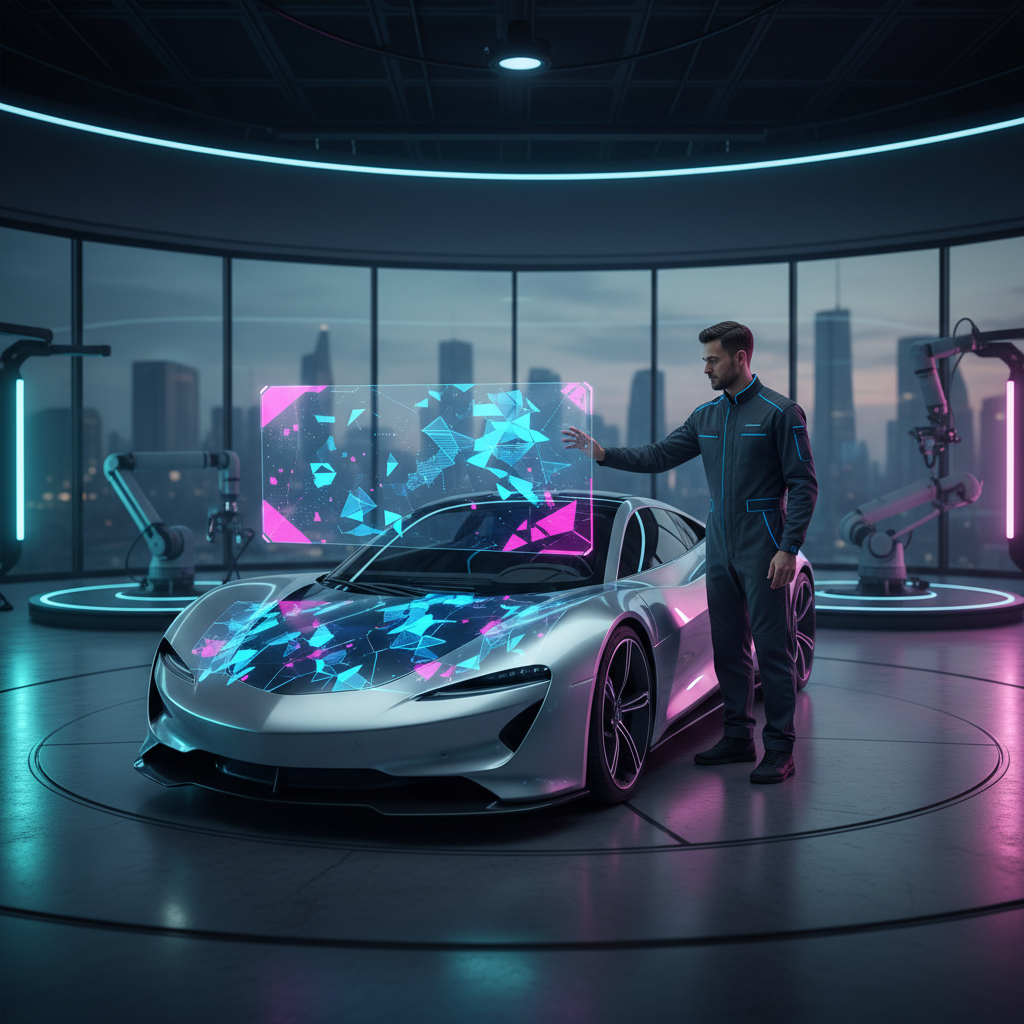
Gone are the days of looking at a 2-inch swatch and trying to imagine it on your car. AI-powered visualization tools now allow installers to generate hyper-realistic renders of any vehicle.
* Generative Livery Design: Designers use AI prompts to create unique patterns, such as "cyberpunk geometric camo" or "liquid metal sunset gradient." The AI generates dozens of iterations in seconds.
* 3D Digital Twins: Advanced software creates a digital "twin" of your exact vehicle model, accounting for every curve and body line. This ensures that graphics aren't distorted when applied to complex bumpers or mirrors.
* Color Matching AI: Computer vision can now analyze a photo of any object (like a favorite pair of sneakers or a sunset) and suggest the closest matching vinyl film or print-ready hex code.
2. Precision Cutting and Automated Templating
Accuracy is the difference between a "good" wrap and a "pro" wrap. AI is drastically reducing human error in the preparation phase.
| Technology | Benefit to Vehicle Owner |
|---|---|
| Cloud-Based Templates | Ensures 100% accurate fitment for 2026 vehicle models instantly. |
| AI Nesting | Minimizes material waste by optimally arranging pieces on the vinyl roll. |
| Automated Plotting | Cuts complex logos and accents with sub-millimeter precision. |
By reducing waste through AI nesting, shops can keep costs stable even as material quality improves. You can explore current market pricing for these services using our cost calculator.
3. The Rise of "Smart" Materials
While the AI works on the design side, material science is keeping pace. In 2026, we are seeing the emergence of:
* Self-Healing Polymers: Films that use heat-sensitive memory to "heal" swirl marks and light scratches automatically.
* Photochromic Wraps: Vinyl that subtly changes shade or opacity based on UV exposure or temperature, controlled by microscopic structural changes in the film.
* Integrated Sensors: Some high-end commercial wraps now include thin-film sensors that can detect impacts or tampering, sending alerts directly to the owner's phone.
4. How to Find a Tech-Forward Shop
Not every shop has embraced the AI revolution. To get the best results, you want an installer who utilizes modern design software and precision cutting tools.
When interviewing a shop, consider asking:
- Do you provide 3D AI renders before installation?
- Do you use pre-cut templates or hand-trim on the vehicle?
- What AI tools do you use for custom livery design?
To find the most advanced installers in your area, use TheWrapMap search tool to filter through top-rated professionals.
The Future of Car Wrapping
As we look toward 2027 and beyond, expect AI to integrate even further with augmented reality (AR). Imagine walking out to your driveway, putting on AR glasses, and seeing three different "virtual wraps" projected onto your car in real-time.
Whether you want a classic chrome delete or a completely custom AI-generated masterpiece, the technology is finally here to make it happen flawlessly.
Ready to start your project? Browse different wrap types to see which finish fits your vision.
Frequently Asked Questions
How does AI help in the car wrap design process?
AI allows designers to create complex, one-of-a-kind patterns and liveries in seconds based on text prompts. It also enables hyper-realistic 3D rendering, so you can see exactly how a wrap will look on your specific car model before the installation begins.
Does AI technology make car wraps more expensive?
While AI-assisted design may have a premium fee at some boutique shops, it actually helps lower costs in the long run. AI nesting technology reduces vinyl waste, and automated cutting minimizes labor hours, helping to keep overall wrap prices competitive.
Can AI improve the fitment of a vinyl wrap?
Yes. In 2026, many design programs use AI to create 'Digital Twins' of vehicles. This allows the software to account for the stretching and shrinking of vinyl over 3D curves, ensuring that logos and stripes remain perfectly straight once applied.